

I love visiting botanical gardens. Not only are they invariably lush and verdant, but (due to photosynthesis) they are often also heavily oxygenated, which physiologically results in lowered oxyhemoglobin in the cerebral frontal lobe, thereby decreasing one’s blood pressure and cortisol levels. Psychologically, botanical gardens have been proven to be restorative environments that alleviate mental fatigue, improve negative moods, reduce depression, and enhance one’s overall well-being. To put it in plain English, not only do I leave feeling relaxed, but in a great mood, with the added bonus of having been able to admire nature’s splendor.
Recently, I spent a few hours at the George Brown Darwin Botanic Gardens in the Northern Territory, Australia. Despite finding myself in the middle of a torrential downpour and, at one point, miscalculating a seemingly short jump off a wall, slipping, and bruising my hip, I thoroughly enjoyed myself!
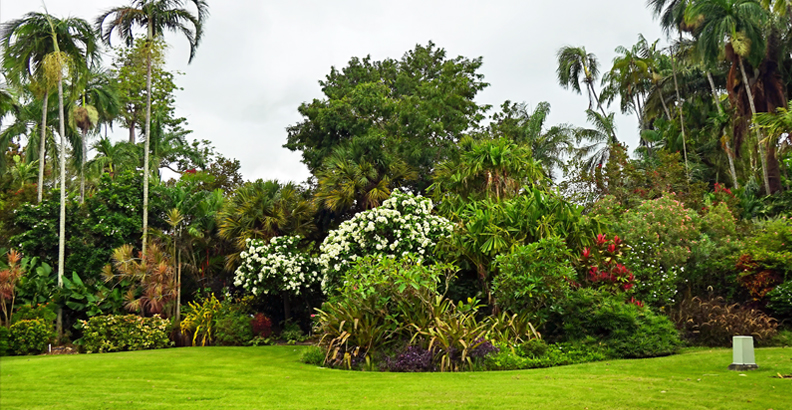
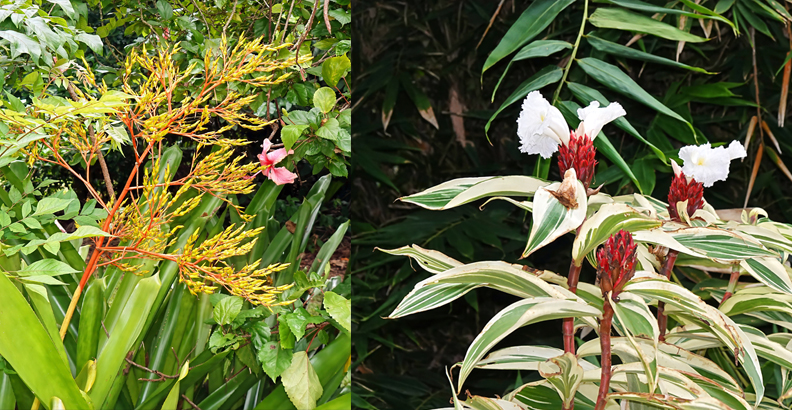
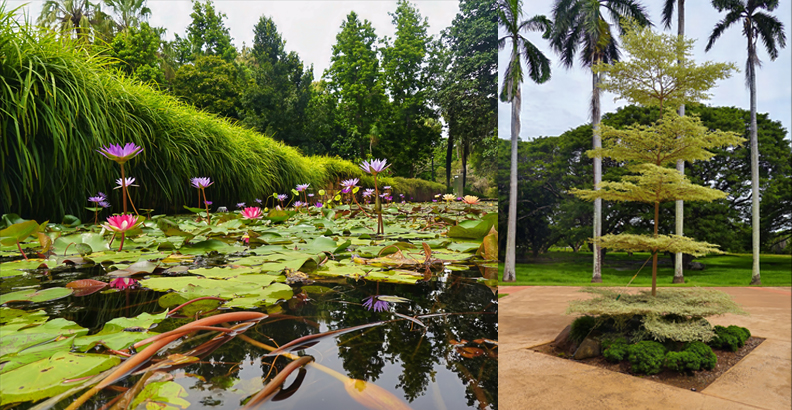
There is a plethora of beautiful flora, some great water features, a number of terrific sculptures, and all sorts of paths and trails that one can take encompassing the Gardens’ different areas, including the Woodlands, the Rainforest, the Lawns, the Cycad Garden, and the African-Madagascar Garden.
In 1968, horticulturist George Brown came to Darwin on a golfing trip and enjoyed it so much that he stayed and got a job at the Darwin Botanic Gardens (established in 1886), going on to serve as its Superintendent from 1972 to 1987. This was not an honorific title, as Brown personally managed, designed, and shaped the Gardens for 15 years. In 1974, a couple of years into his tenure, Cyclone Tracy hit and pretty much devastated the Gardens, destroying 89% of the plant life.
In leading the rebuilding of the Gardens, Brown replanned the plantings with an eye toward resilience, and emphasized bold foliage, layered plantings, and contrasting colors, making the Gardens a living display of tropical landscaping that served as a model for the “greening” of Darwin, shaping its identity as a lush tropical city.
Following his tenure at the Gardens, Brown became Darwin’s Lord Mayor, serving from 1992 until his death in 2002, earning him the nickname “Mr. Darwin.”
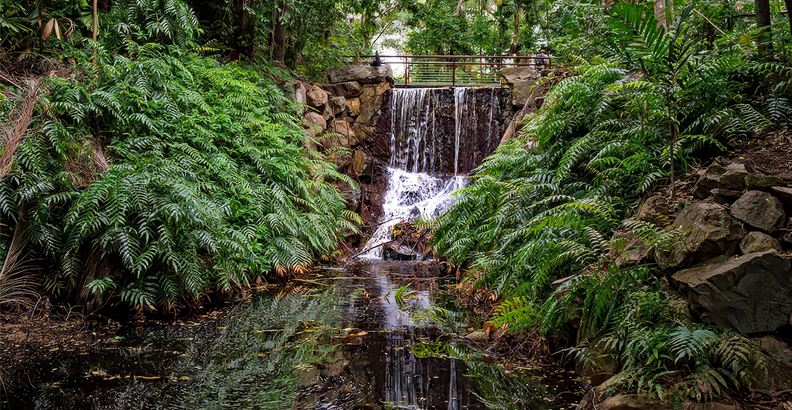
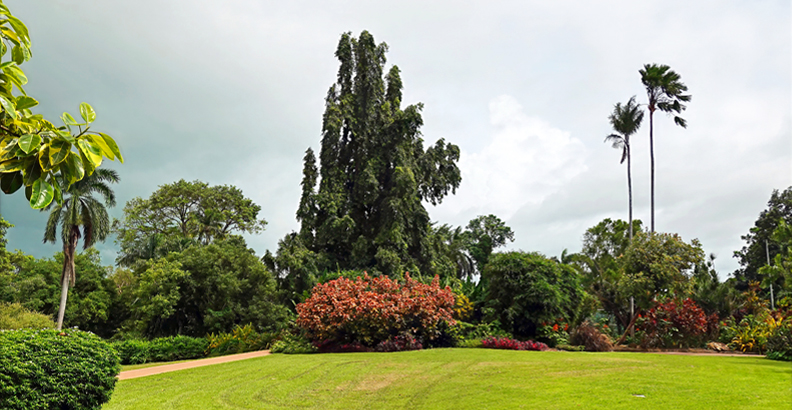
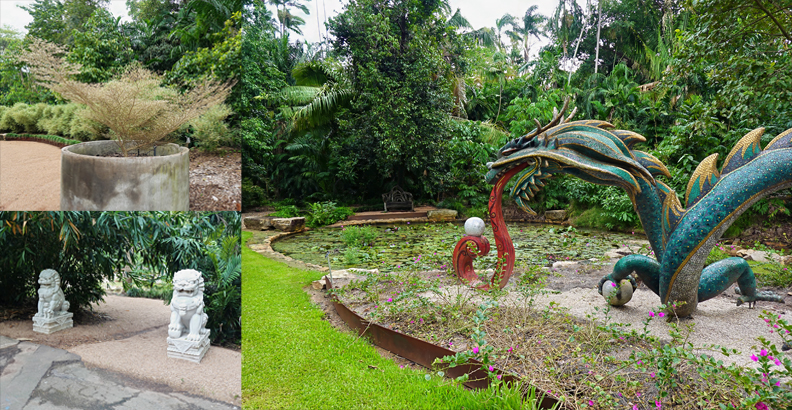
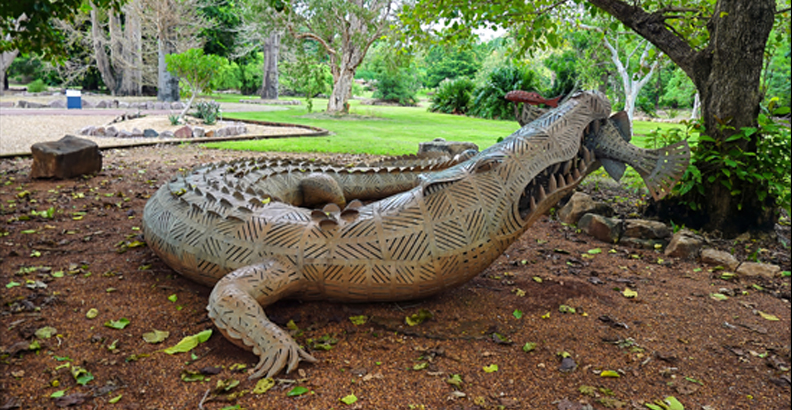
Some of my favorite spots in the Gardens include the waterfall in the Monsoon Forest/Rainforest Gully; the expansive lawns surrounded by lush, colorful foliage; and two sculptures by Chilean artist, Techy Masero, who’s been a proud Darwin resident since 1985. The first is the stunning mosaic water dragon standing guard over the lily pond in the Dragon Courtyard of the Asian Garden area (originally created in 2019 and moved to the Gardens in 2020); and the second, George, the Big Crocodile, which—located in the Africa-Madagascar Garden—is nearly 33-feet long, made of steel dipped in zinc, portrays a saltwater crocodile (aka a “Saltie”) with a barramundi in his jaws, and has been deliberately patterned to resemble the pandanus weaving of the area’s indigenous Aboriginal communities.
There’s something for everyone at the George Brown Darwin Botanic Gardens, and at the end of the day, who can’t use a big dose of natural beauty in their life?
George Brown Darwin Botanic Gardens
Darwin, the Northern Territory, Australia
Click HERE for info
Get into it!
#DarwinBotanicGardens
 |

 |
 |
 |
 |
 Website Powered by BannerOS. Your Business Energized!